The morning we found the fox prints
It was a Tuesday in March. The frost was still on the brambles when Mira called us over. What followed became a three-week investigation in tracking, soft footsteps, and the patience of standing very still.
We had been at the clearing for maybe ten minutes — long enough for the children to scatter and for Marius to start the fire. Mira was crouched at the edge of the muddy patch where the path bends down toward the stream. She didn’t shout. She just turned and waved at me with that whole-arm wave four-year-olds do when something is too important for words.
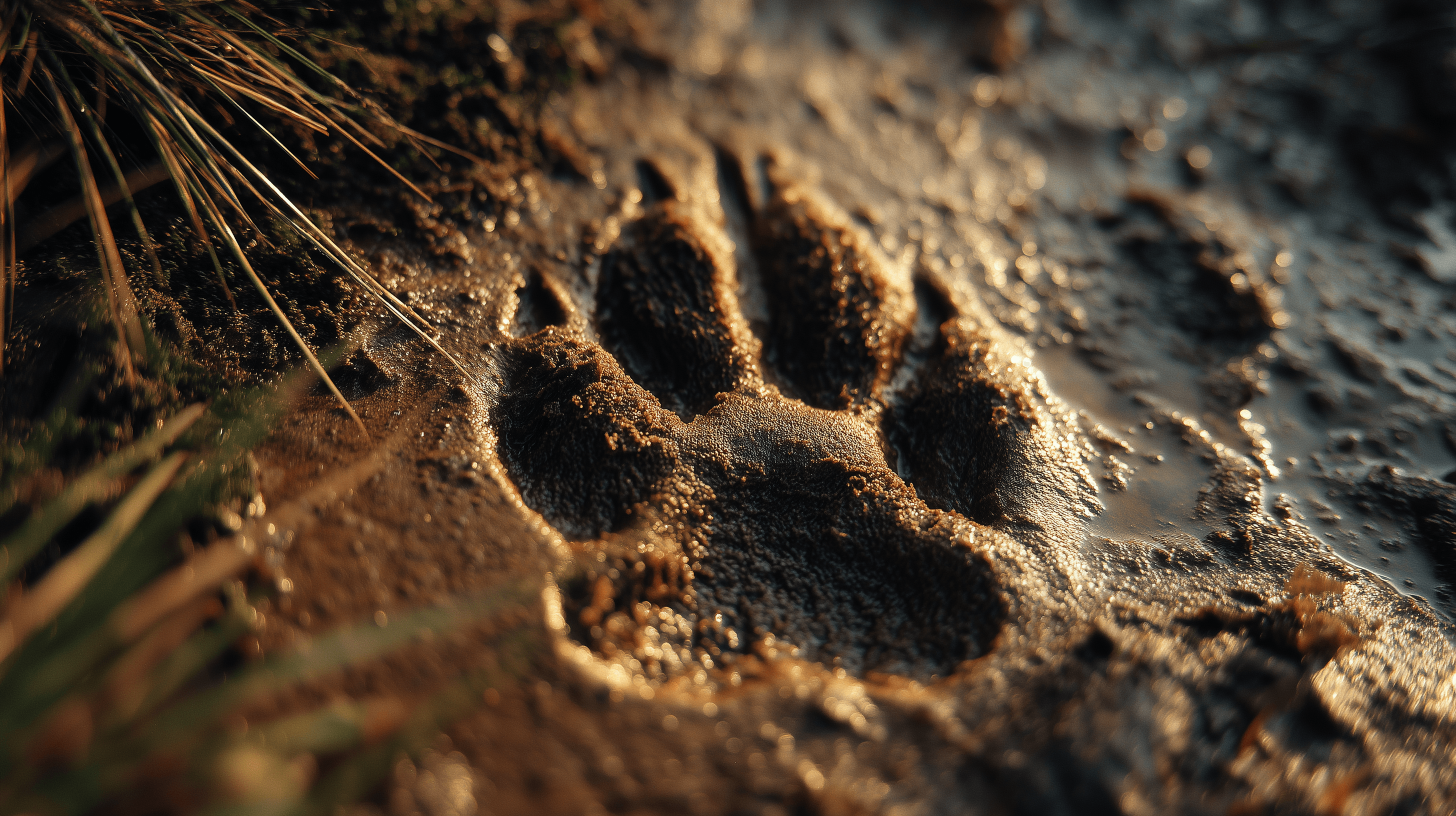
I went over. The print was perfect. Four toes, the small heel pad, no claw marks (cats hide their claws; foxes don’t, but young foxes step lightly enough that the claws barely register). It was no bigger than a fifty-rappen coin.
“It is a fox,” she said, with absolute certainty. “A small one. Maybe just one year.”
I asked her how she knew. She thought about it. “Because the dog prints have all the toes wrong, and this is the right kind of small.”
What we did with it
The temptation, when something like this happens, is to make it a Lesson. To produce the field guide, to gather the children around, to explain. We try not to. The print belonged to Mira — she found it — and we let her decide what to do with it.
She decided to follow it. Of course she did.
Over the next three weeks, the fox-prints became a quiet, parallel curriculum. The children learned to walk softly (they wanted to, so the fox would not hear them). They learned to spot tracks in mud and on the soft moss by the bigger trees. They learned that a fox’s stride is about the length of a small adult’s forearm, because we measured it with sticks. They learned that you almost never see the fox itself — and that this is fine, because absence is also a kind of presence, and the prints are evidence that something whole and wild is sharing the forest with you.
What it has to do with anything
People sometimes ask us what forest school “teaches.” The honest answer is: it teaches what the forest happens to be teaching that week. In this case it was tracking, scale, restraint, and the social rules of a group that has decided, collectively, to be quiet.
Three weeks later we still haven’t seen the fox. The children are completely satisfied with this.