Our Forest Day · 08:30 to 11:30

Three hours, one rhythm.

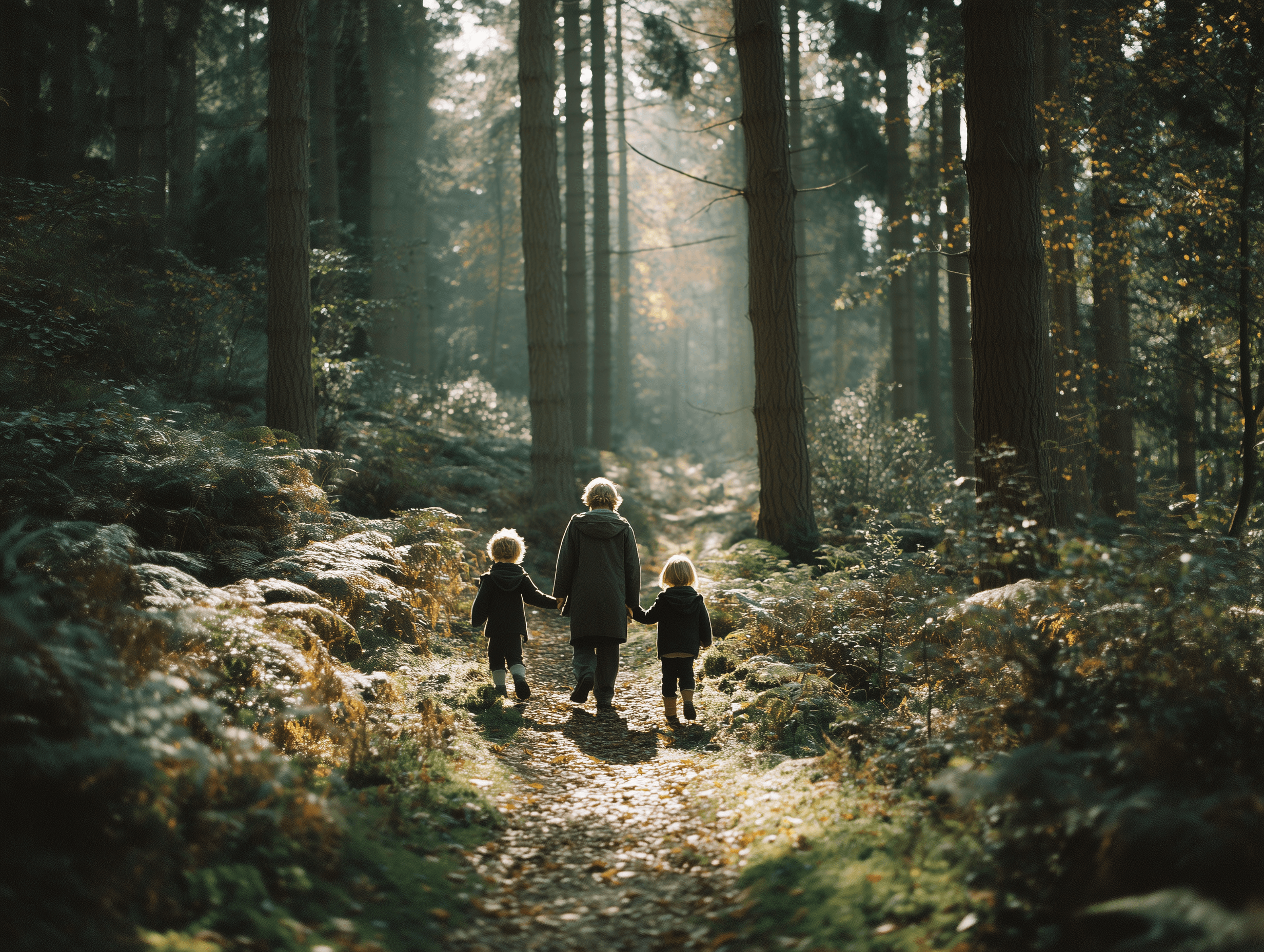
Every morning follows the same routine, with many rituals of discovery, arrival and greeting, a walk to the forest site, fire, free play, guided activities such as creative work, cooking or crafts, saying goodbye in the forest, and the walk back to the meeting point, where the parents are welcomed. Children need repetition and familiar routines to give them a sense of security. That is why we keep the rhythm the same.

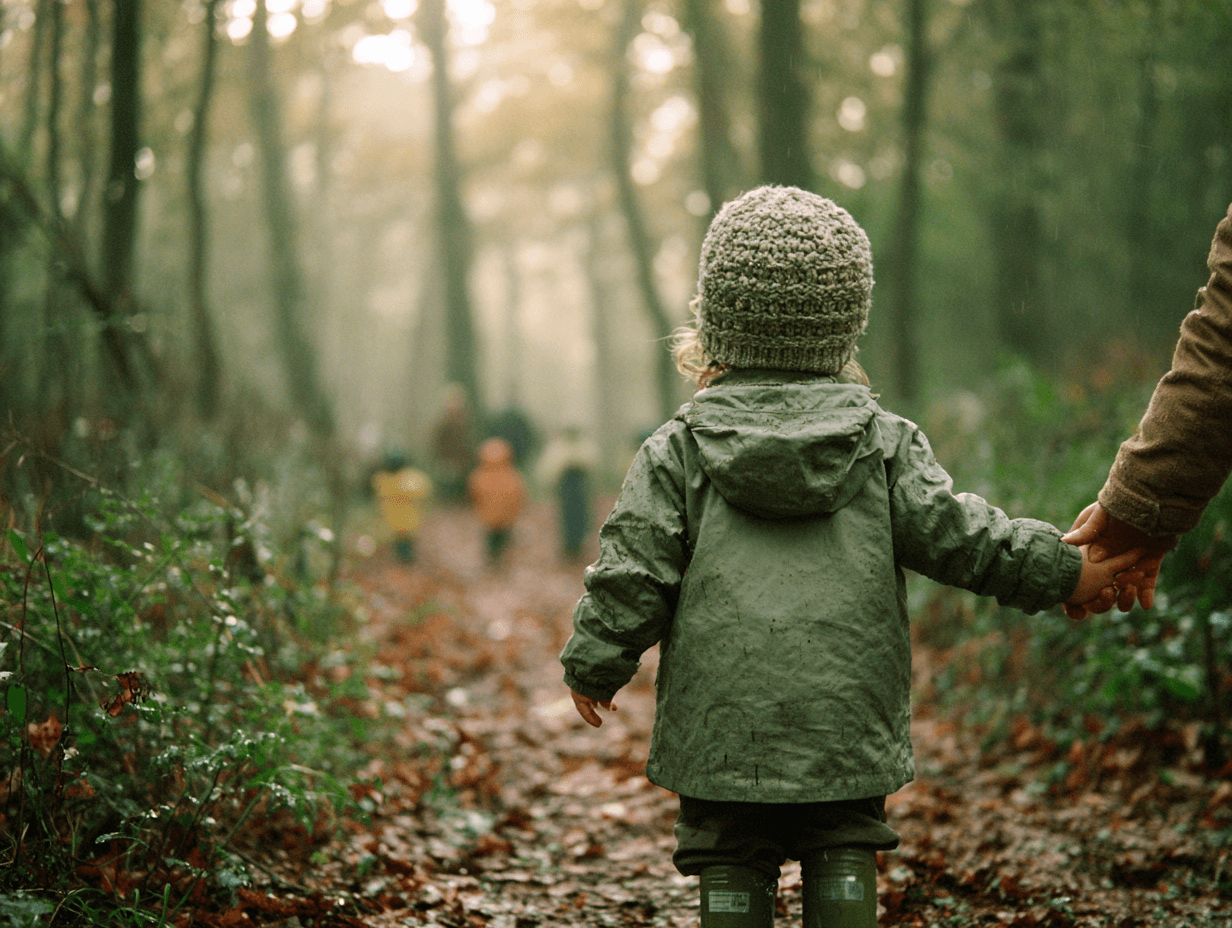
08:30A child in a green coat and knit hat, seen from behind, holding an adult's hand on a misty forest path, other children ahead
First ritual

Arrival.

Is everyone here? We greet one another with singing and laughter, we say good morning, and we think of who is missing today — greeting them, too, from the forest.

The handover takes as long as it needs to take. Some children simply set off; others need a few minutes, or the support of their trusted grown-up a little longer. Both are okay. We know this well.

"Bye, Mum" — and they turn, and they go — and we are there.
Second ritual

The way to the forest.

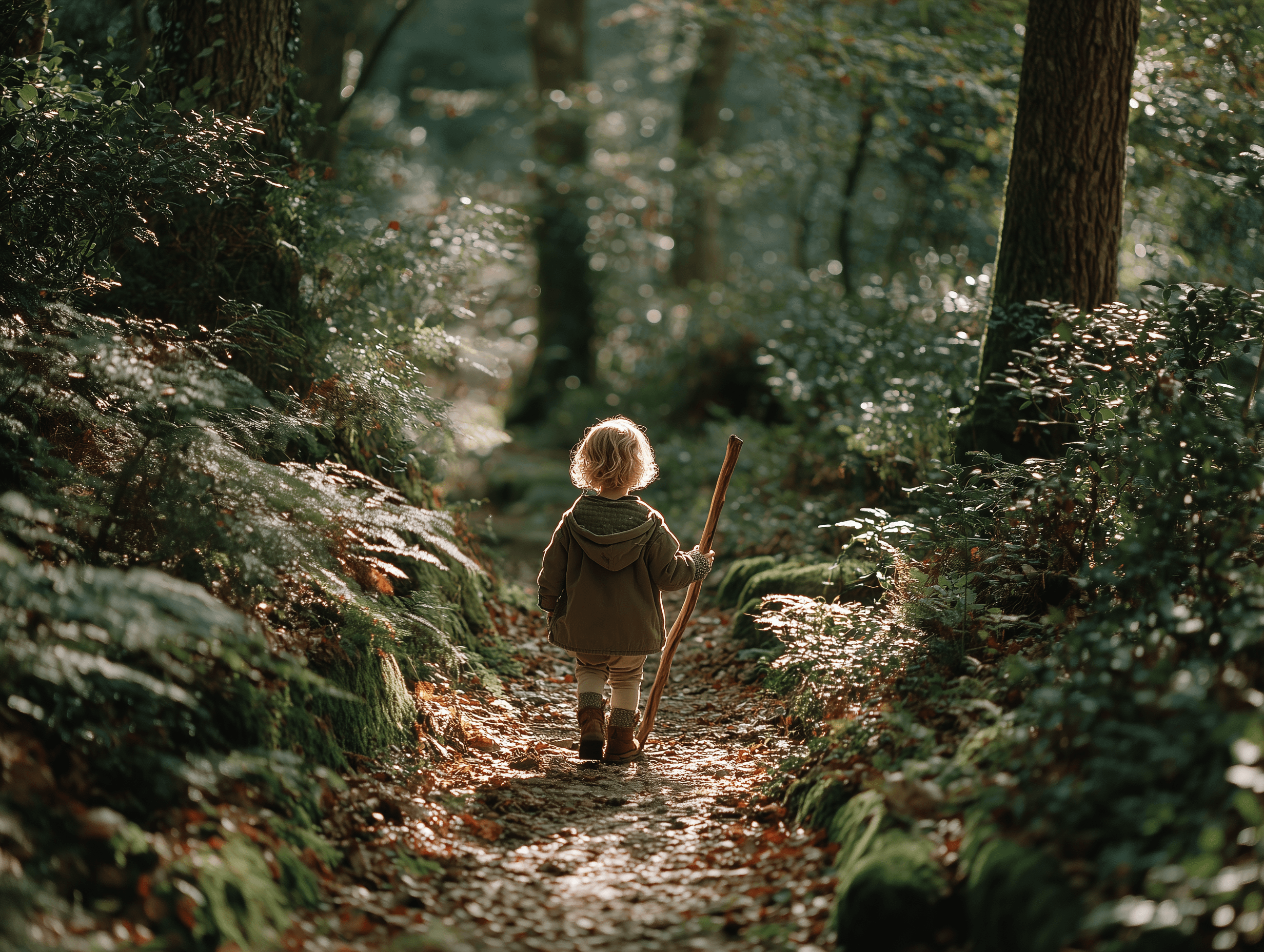
At the beginning we always take the same path. There are a few fixed stops, and — again and again — spontaneous ones, for an exciting discovery: a snail, a flower, a singing bird.

Everyone walks at their own pace, and the first ones wait at the next stop. Time, in the forest, is generous.

The journey is the destination.

08:45A toddler walking down a leaf-covered forest path with a wooden walking stick
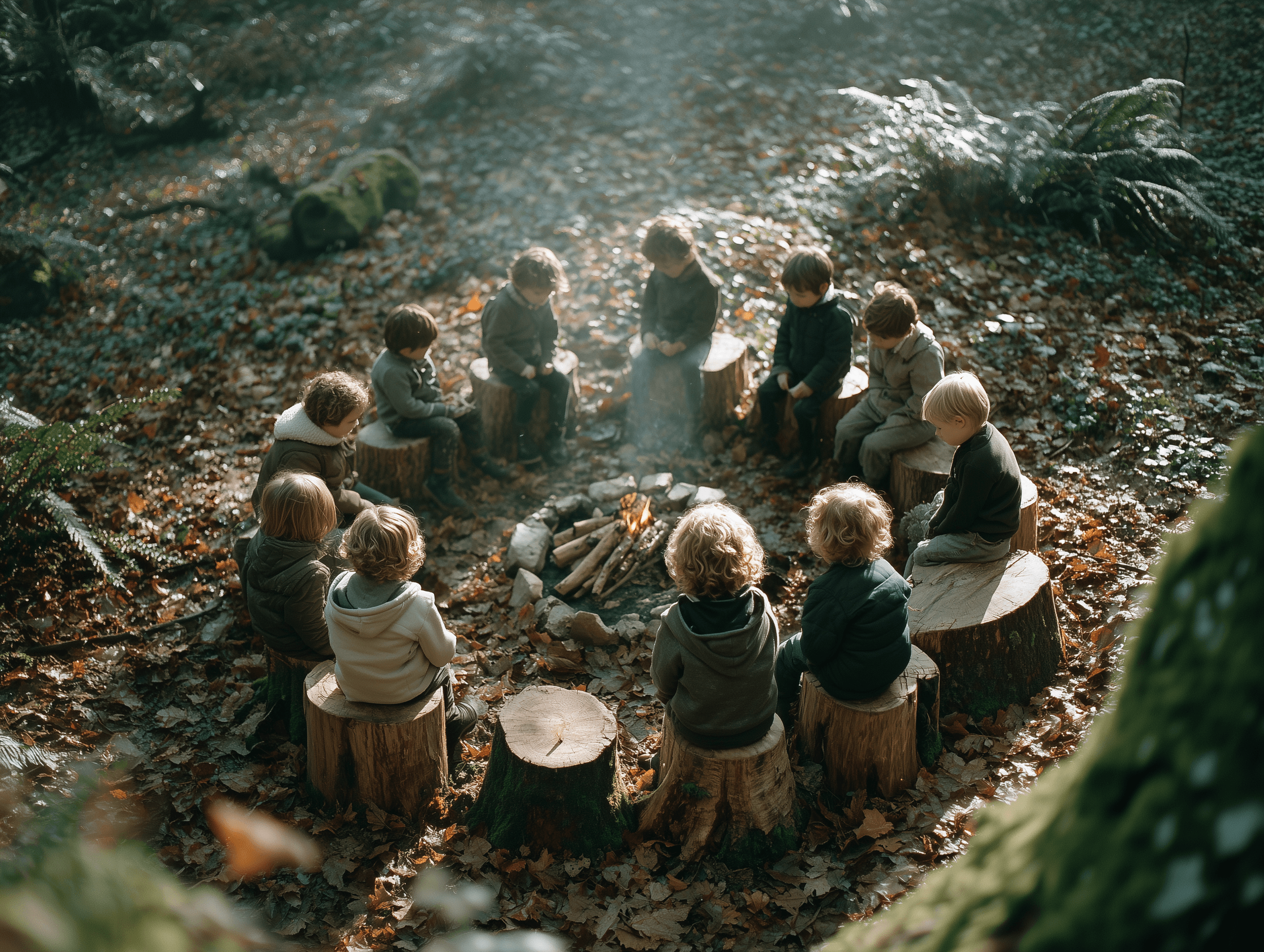
09:15Children sitting in a circle on log stumps around a small fire
Third ritual

Morning circle.

At the forest spot we sit down on the tree trunks and greet the forest. We talk about what we have planned for the day, and we say our morning verse together.

Then the children can eat their snack or begin to play — and a fire is made.

The same forest song every morning. It tells the children: you have arrived. You belong here.

Fourth ritual

Campfire & snack.

An adult tends the fire, and the children watch from their places. We talk about what fire is — that it is hungry, that it likes thin sticks first, then thicker ones.

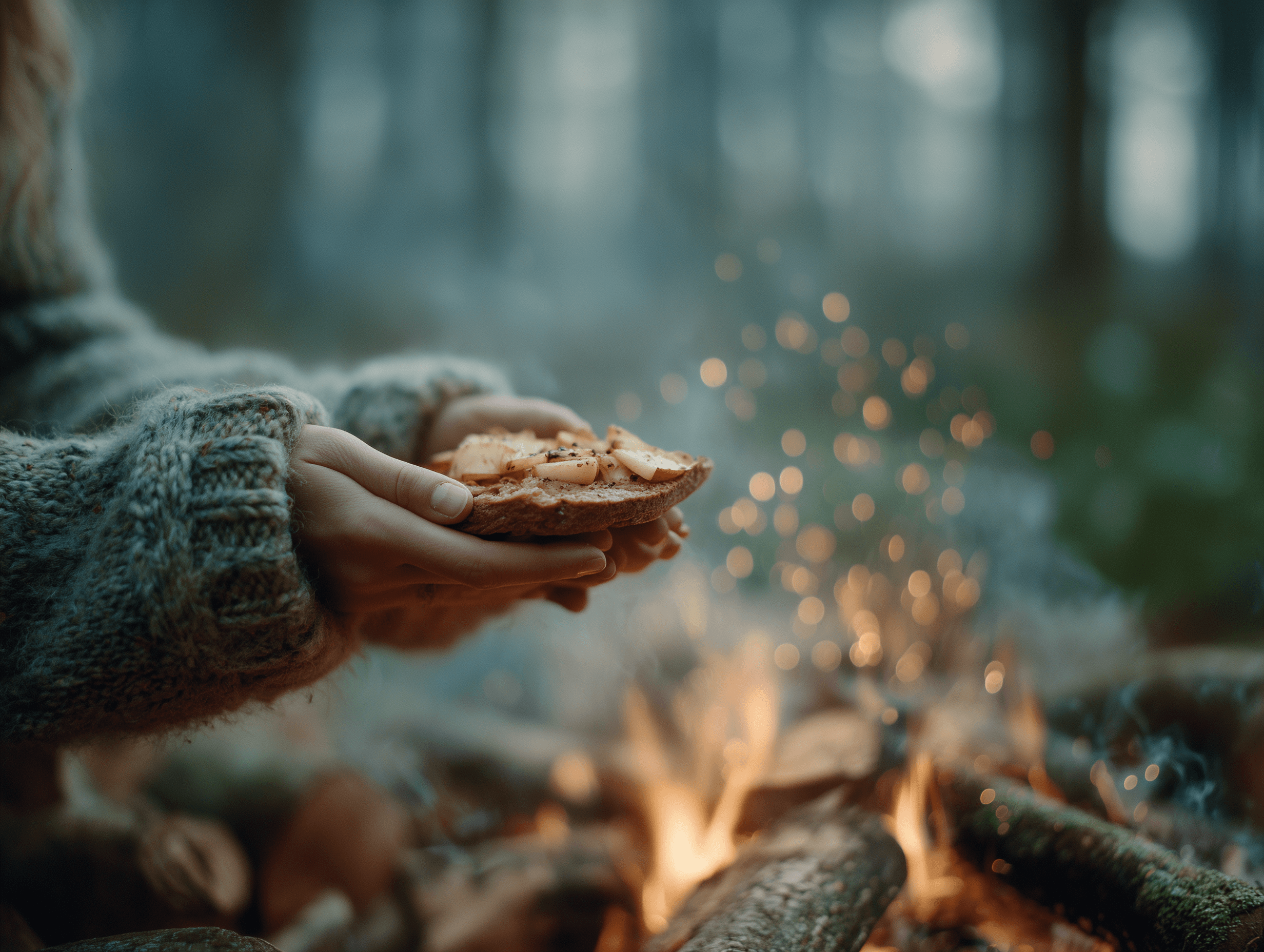
Sausages are roasted, and so are corn and twisted bread. Soups are cooked, syrup is stirred, and small forest cakes are baked.

An experience in nature — coziness, a sense of adventure, and the forest felt first-hand.

09:45A child's hands holding a slice of bread topped with apple slices
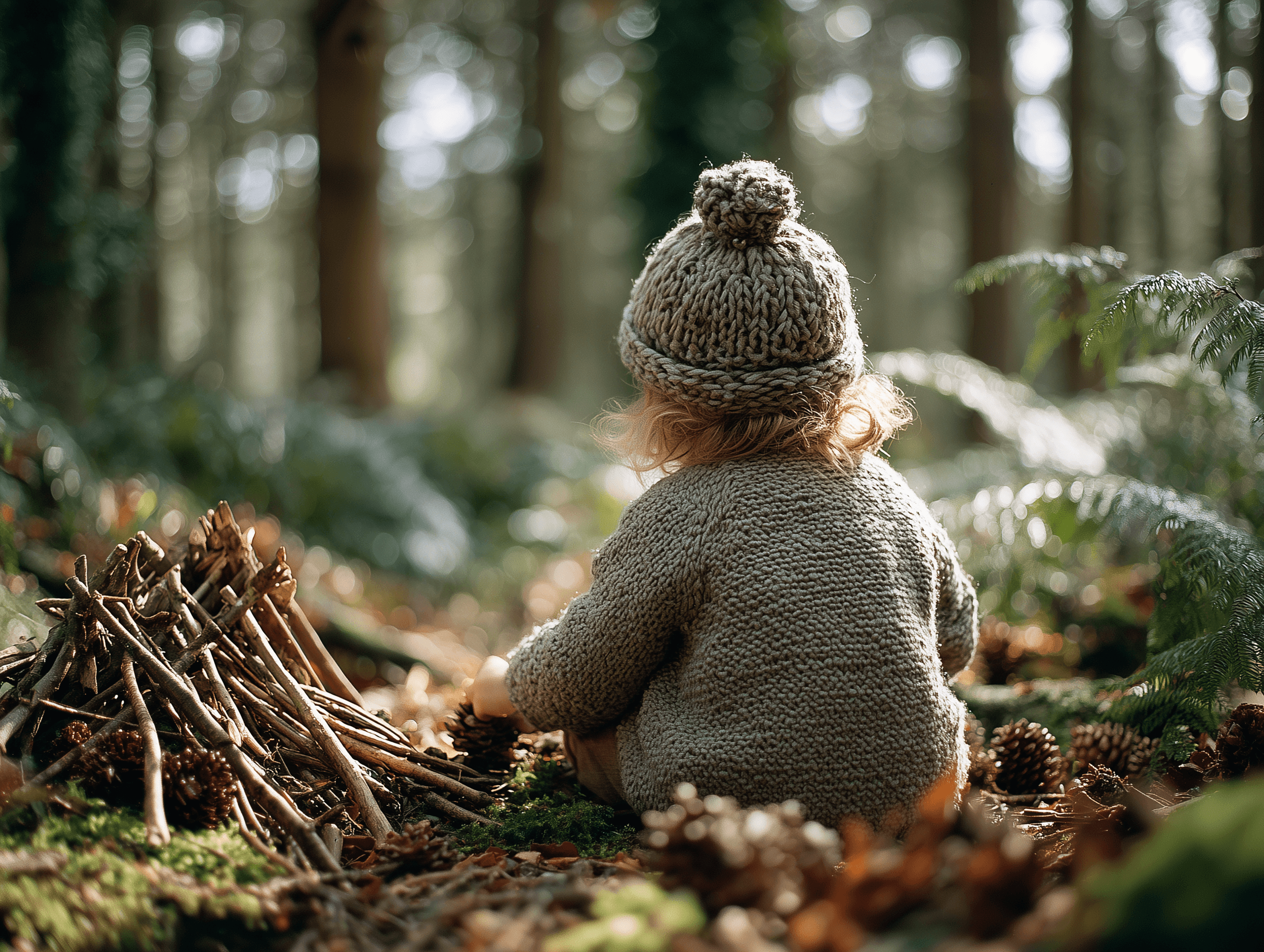
10:15A child seen from behind, sitting in front of a teepee of sticks they have built
Fifth ritual

Free play.

During this time, nothing is asked of them. They build, they dig, they shovel — with tools they have brought along or made themselves. We watch, we rarely step in, we listen, and we are always there.

This is when the real learning happens. We have learned not to interrupt it unless we truly must.

It is their work — and through it they gather the skills of a life.

Sixth ritual

Guided activity.

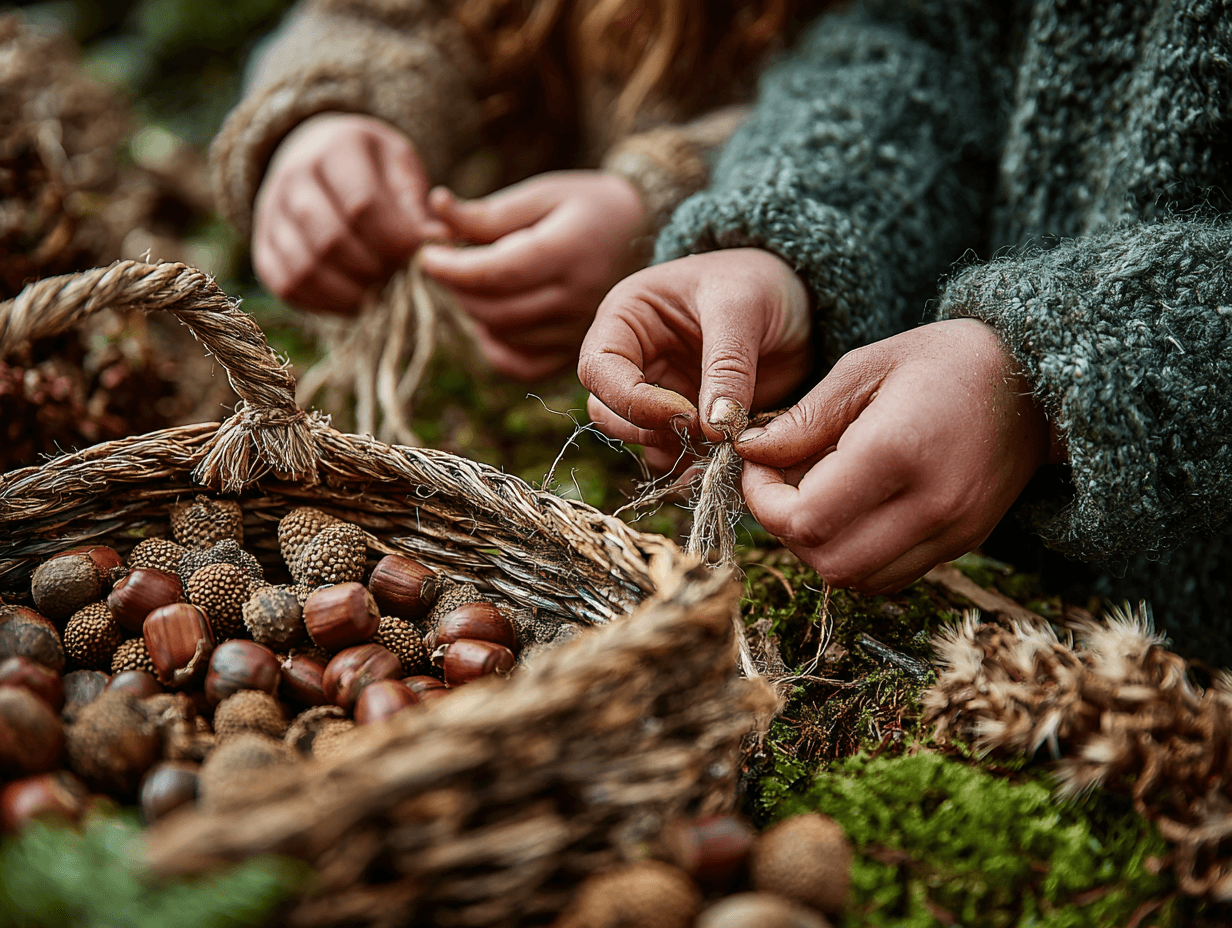
Each day the forest women bring an idea into the woods — something to make, or to cook and bake together.

With simple natural materials and a little imagination, wonderful things take shape and wonderful dishes are prepared — things that delight the children and let them experience nature with their hands.

Gentle support to learn new skills, test their own limits, and feel what it means to be together.

10:50Children's hands working twine beside a basket of acorns and nuts on a mossy forest floor
11:30Two small children walking toward a wooden gate with mist behind it
Seventh ritual

Farewell.

A song lets the children know, gently, that our time in the forest is coming to an end. Together we tidy up, pack the backpacks, and say goodbye to the forest. Then we walk back, where the parents are waiting at the meeting point.

We send each child home with a sentence — today she found a feather, today he climbed the log all by himself, today we baked forest pizza. And then they go home, tired in the best kind of way, with soil and new experiences in their pockets.

Bark in their pockets, mud on their knees, and happy faces.

Visit a morning and see for yourself.

A trial morning is the only way to really know. Children stay for the full three hours, parents are welcome at the gate.

Book a trial morning