Mud, fire, and the very first frost
The first frost arrives the way it always does — without warning, on a Wednesday, while we are tying boots at the gate. You can tell before you reach the woods. The grass crunches differently underfoot. The cherry tree at the entrance has lost the last of its leaves overnight. The air smells of cold metal.
The children notice within the first thirty seconds. They are quicker readers of weather than we are.
“Lena,” says Tobias, three years old and very serious about meteorology, “the puddles are hard today.”
He is right. The puddle by the gate has a thin glass lid on it. He stamps; it cracks like a biscuit. The other children come running.
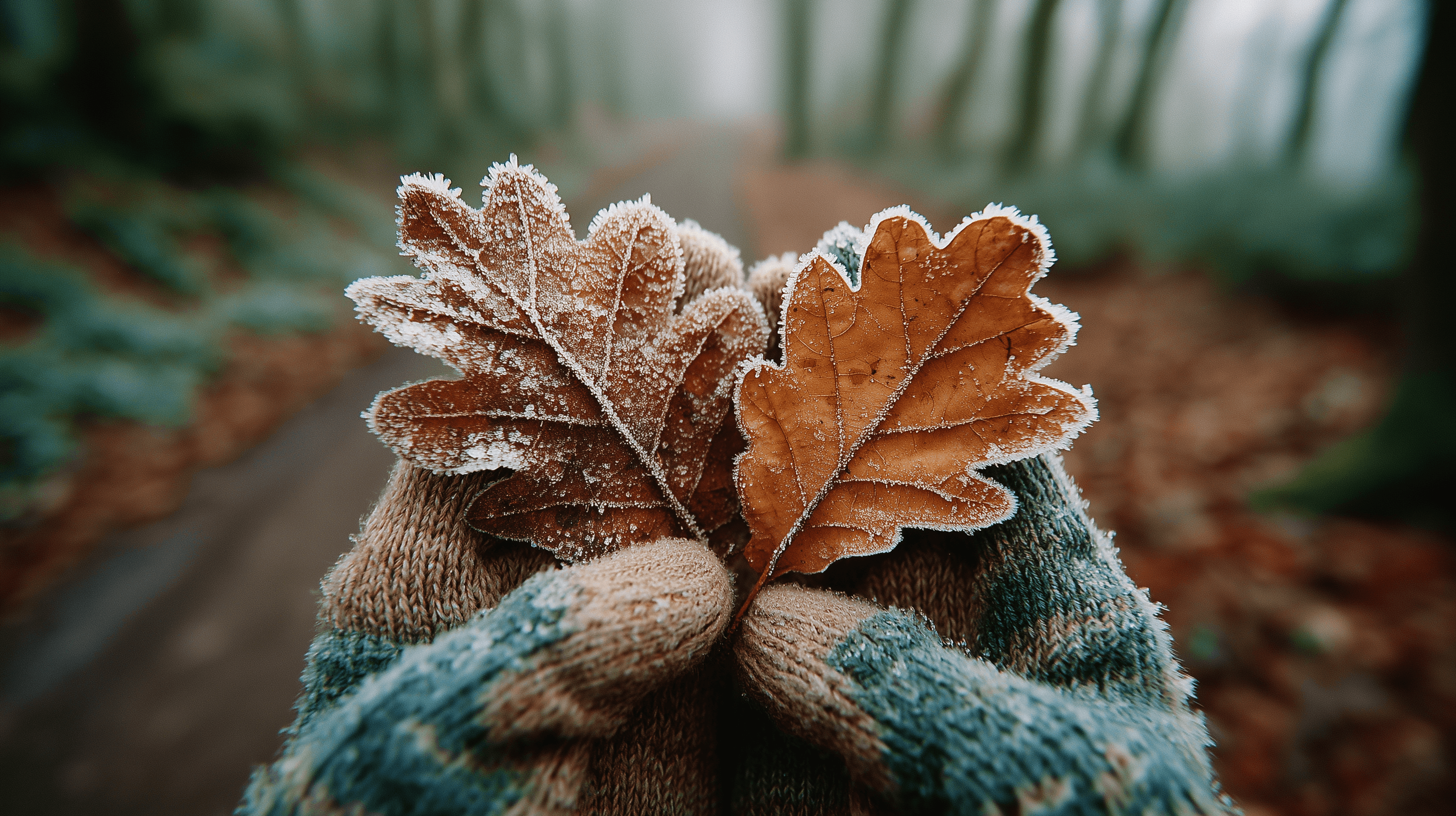
What changes
In the seven weeks before the first frost, the forest is one place. After it, it is another. The children adapt with a speed that is humbling — they were learning autumn while we were still calling it autumn, and now they are learning winter while we are still trying to remember where we put the spare wool gloves.
Some things become easier. The mud, which has been the dominant feature of October, freezes into something you can sit on without ruining your trousers. The path by the brook, which has been treacherous with leaf-slime, is suddenly grippy and trustworthy. The fire, which we tend every morning at the stump-circle, becomes the most important thing in the morning.
Some things become harder. Hands lose feeling faster than children expect. The smaller children, especially, need reminding to put their gloves back on; we have learned to keep a small spare pair in the morning bag. Nose-running becomes a small, constant administrative task.
But mostly: what changes is that the forest becomes louder, in the way that quiet places get louder when there is less competition. You can hear the small movements of birds in the bare branches. You can hear your own boots on frozen earth. You can hear the fire long before you can see it.
The lesson, if there is one
We don’t teach the seasons. The forest teaches the seasons, and the children pass the lesson on to us when they are ready.
The morning after the first frost, Anouk arrived at the gate and put her hands very deliberately into her woolly pockets before she said hello to me. I asked her why. She looked at me as though I had asked something faintly silly.
“Because it’s winter now.”
She is three. She is right.